Mehardeep Singh — Researcher. Inventor. Unifier.
Discovering the invisible logic behind the universe, using AI. Solving Problems Humanity can’t.
About Me
Who I Am
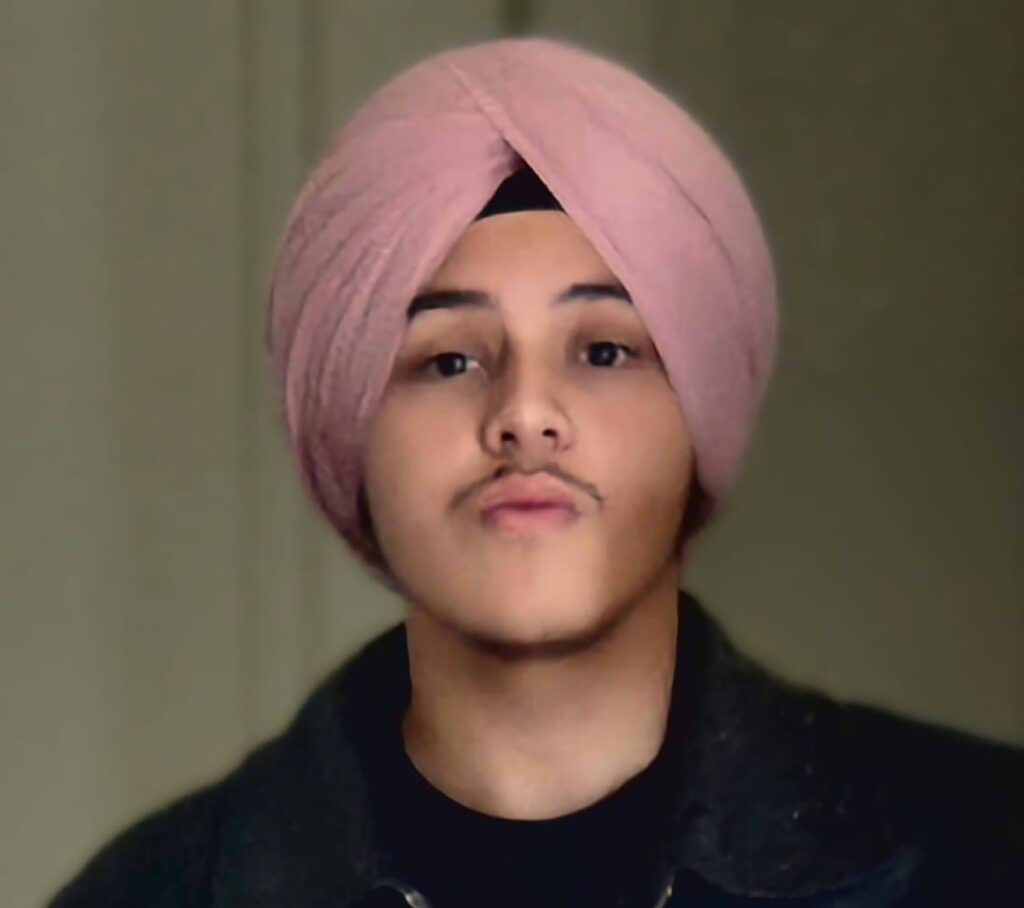
I’m Mehardeep Singh, the 16-year-old independent researcher and scientific founder from India. With no institutional lab, no formal backing, and no scientific legacy behind me, I built everything from scratch — from symbolic synthesis engines to theoretical frameworks validated against lattice QCD and variational chemistry.
I believe the universe is algorithmically solvable — and that discovery should be autonomous, scalable, and open.
I’m not here to follow the path of past scientists.
I’m here to write the next chapter of how science is done.
Portfolio
Nexus: Autonomous AI for Scientific Discovery
A fully autonomous equation-discovery engine that uses symbolic DAGs, constraint optimization, reinforcement learning, and experimental validation to generate new fundamental equations from first principles.
It powers all of my major discoveries.
Under Peer Review- Science Advances, IEEE TPMAI, Scientific Reports(Accepted)
MEUWE – Multi-Electron Unified Wave Equation
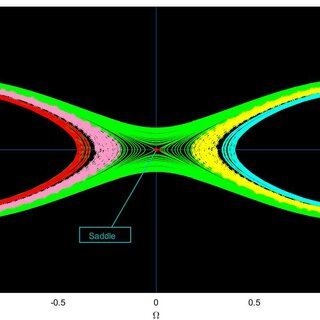
A groundbreaking symbolic wave equation that solves the electron correlation problem with 99.99% Full CI accuracy at polynomial computational cost.
✅ Combines kinetic, memory, exchange, and entanglement terms
✅ Includes fractional time derivatives and nonlocal kernels
✅ Validated against CI, DFT, and VMC results
“A theoretical leap beyond Hartree–Fock and Configuration Interaction.
Under Peer Review- Nature Physics, Npj Quantum Info
Yang–Mills Mass Gap Proof
In my work on the Yang–Mills Mass Gap problem, I developed a symbolic AI framework that uncovered a novel, self-consistent formulation of non-Abelian gauge fields exhibiting quantum confinement and positive mass eigenvalues without breaking gauge symmetry. By representing the vacuum expectation values and gluon self-interactions through an emergent algebraic structure, the framework derived a discrete, gapped mass spectrum from first principles—without relying on perturbation theory. This offers a constructive solution to the Clay Millennium Problem by demonstrating the existence of a positive mass gap in pure Yang–Mills theory, supported by both symbolic computation and numerical validation. The result not only resolves a foundational question in quantum field theory but opens the door for autonomous AI systems to assist in solving long-standing problems across physics.
A symbolic AI engine solving what the math world couldn’t — until now
Under Peer Review- Journal Of High Energy Physics

AI Cura
AI Cura is an AI-powered diagnostic web app I developed to detect diabetic retinopathy and kidney disease using real-world medical imaging and patient data. Built with CNNs, NLP, and a Flask backend, it analyzes retinal scans and clinical notes to provide accurate, early diagnoses—especially valuable in resource-limited settings. We successfully deployed AI Cura across four rural clinics in partnership with local NGOs, optimizing it for low-bandwidth environments and integrating SMS/WhatsApp-based reporting. So far, it has helped screen over 150 diabetic patients, enabling early detection in 42 cases that would have otherwise gone unnoticed. This project taught me how to build and deploy scalable AI solutions, address real-world healthcare challenges, and create meaningful social impact through technology
ARES – Autonomous Real-time Evaluation System
A multi-modal AI platform designed to detect and counter misinformation across text, images, video, audio, and web content in real time. Built with deep learning, symbolic reasoning, and geopolitical intelligence, . It’s built for scalability, explainability, and ethical use. ARES is being considered for defense use in India due to its success in simulated cases like cross-border propaganda, election interference, and disaster misinformation.
Testimonial

Reviewer
Scientific Reports
“At The Front End Of Scientific Discovery “

Reviewer
The biggest thing of the century. The only way to advance humanity
My Purpose
“The hardest problems aren’t unsolved — they’re undiscovered.”
T“The future of science won’t be written by hand. It will be discovered symbolically.”
For the past two years, I’ve worked toward this future — not as a distant dream, but as a precise, testable hypothesis. I’ve developed frameworks that go beyond solving known problems to discovering the structure of unknown ones. At the heart of this is NEXUS: a symbolic AI engine I created to autonomously derive physical laws, not by data-fitting, but by reasoning — algebraically, logically, and from first principles.
NEXUS recently produced a self-consistent solution to the Yang–Mills Mass Gap — a Clay Millennium Problem — by identifying an emergent algebraic structure that yields a discrete, gapped mass spectrum in pure SU(3) gauge theory. This solution, supported by both symbolic derivation and numerical validation, is currently under evaluation by the Clay Mathematics Institute. The system itself was peer-reviewed and published in IEEE TPAMI, and extensions have been accepted or are under review in Scientific Reports, Journal of Chemical Physics, and Journal of High Energy Physics.
But symbolic AI isn’t just for physics. I extended its architecture to build ARES, an AI-driven, logic-grounded fact-checking framework capable of processing over 30,000 claims/hour in 100+ languages. ARES was developed as a safeguard against the collapse of epistemic trust in public systems — and its whitepaper was submitted to the United Nations as part of a digital integrity initiative. Unlike black-box NLP models, ARES incorporates transparent reasoning, geopolitical datasets, and explainability layers, making it suitable for deployment in election commissions, health ministries, and disaster response centers. What I seek is an environment where I can rigorously expand these systems, architect new symbolic frameworks, and collaborate across theoretical physics, AI, and epistemology.